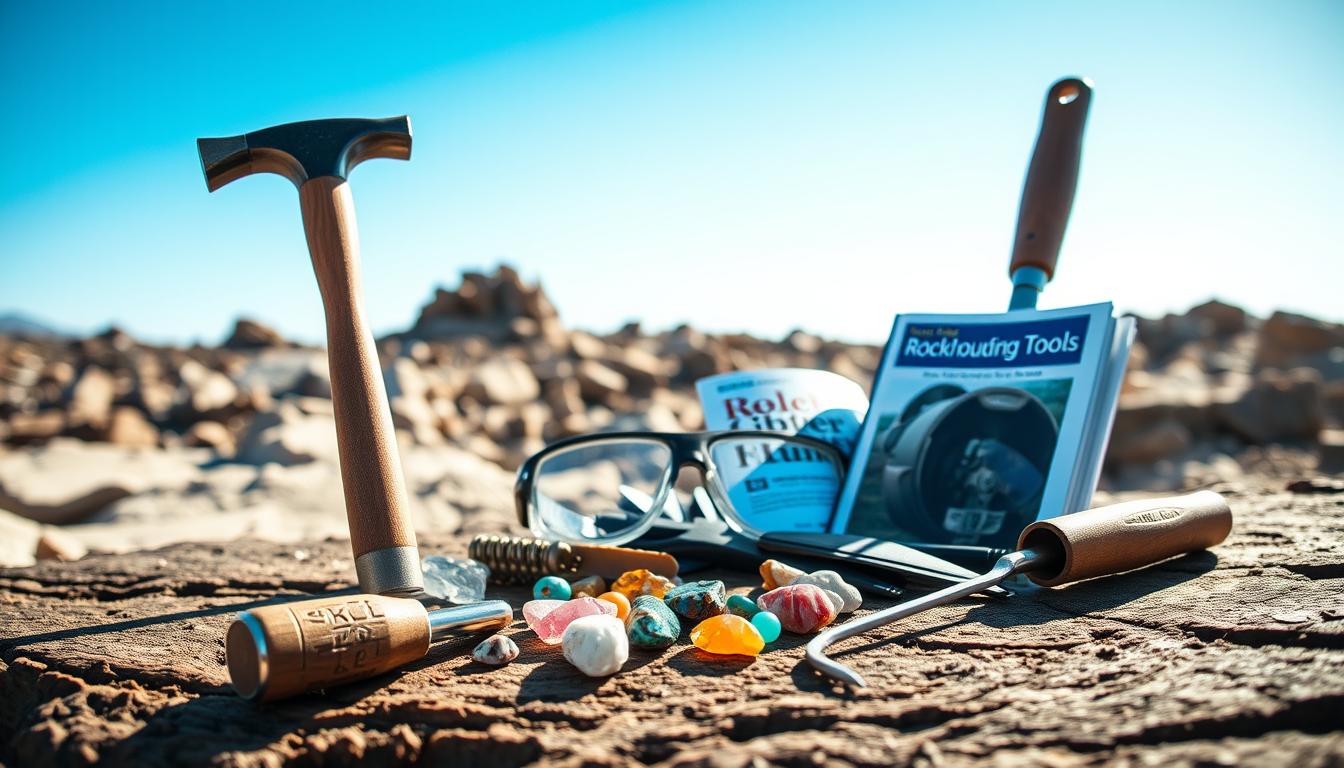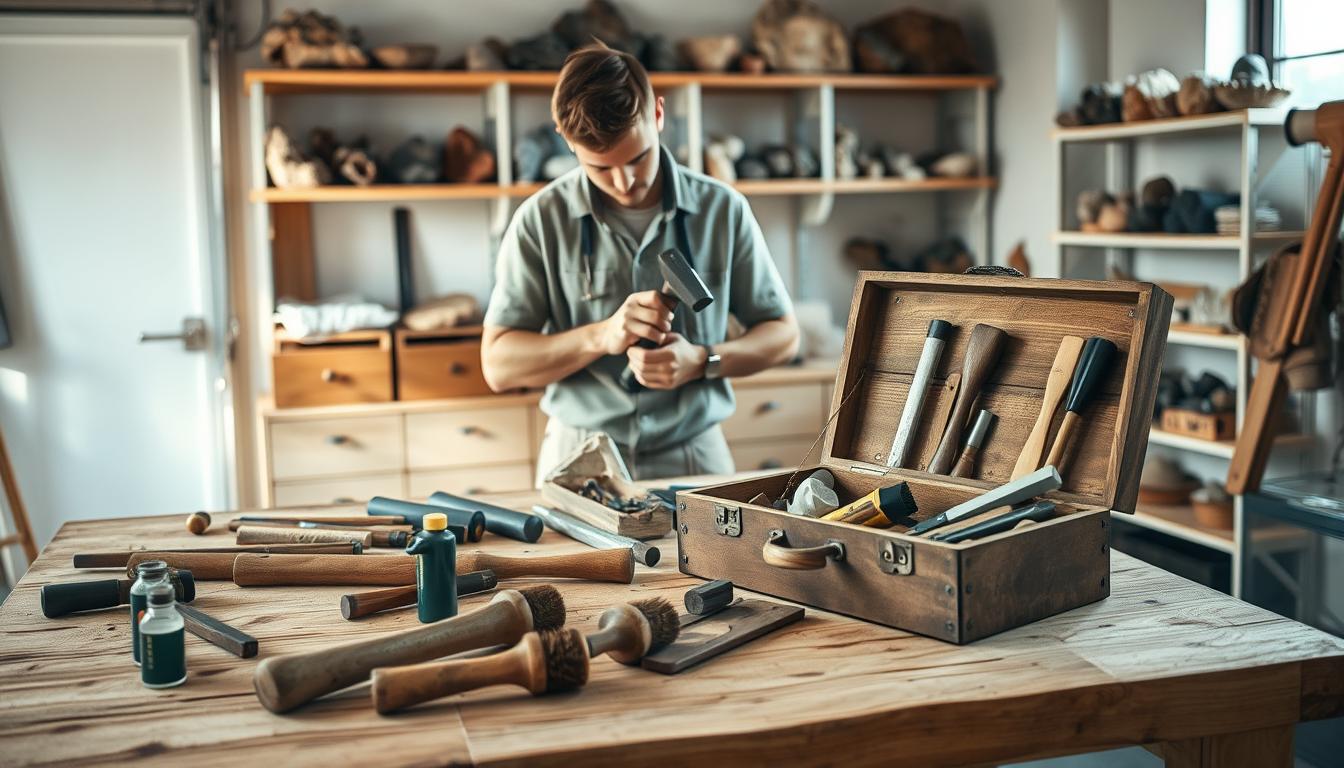
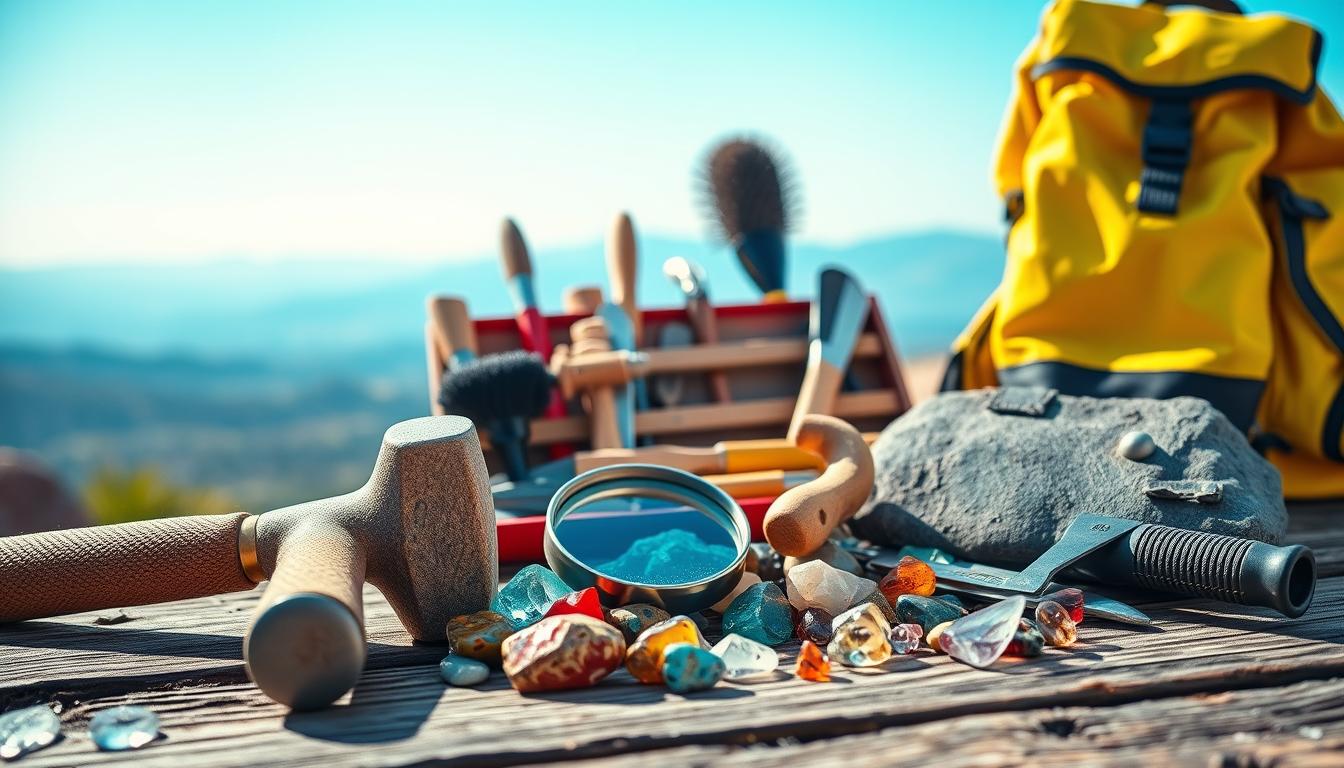
Rockhounding is a fun hobby that lets you explore the outdoors. You get to find hidden gemstones, minerals, and fossils. It also helps you learn more about geology.
To start this adventure, beginners need the right equipment. This ensures a safe and fun experience.
Having the essential rockhounding gear is key. A good beginner rockhounding kit can really help your adventures.
Key Takeaways
- Understanding the basics of rockhounding and its significance.
- Identifying the essential tools required for rockhounding.
- Learning how to choose the right gear for a beginner.
- Exploring the importance of safety gear in rockhounding.
- Discovering how to organize and store rockhounding finds.
Getting Started with Rockhounding
Rockhounding is a hobby where you collect rocks, minerals, and fossils. It’s a journey into the Earth’s history. You explore different places to find specimens that tell us about the Earth’s past.
What is Rockhounding?
Rockhounding is more than just a hobby. It needs patience, knowledge, and the right tools. Rockhounds look for geological specimens, from common rocks to rare minerals and fossils.
Why the Right Tools Matter
Having the right tools is key in rockhounding. Safety gear like gloves and goggles keeps you safe. Tools like geological hammers and rock picks help you find specimens.
Also, having the right storage and identification tools is important. They help you keep and identify your finds.
Essential Digging and Extraction Tools
The art of rockhounding needs the right tools for digging and extraction. These tools help make the process better, safer, and more effective.
Geological Hammers and Rock Picks
Geological hammers and rock picks are key for rockhounding fans. They help break rocks, get specimens, and dig into hard places. High-quality geological hammers are made to last through lots of use.
Estwing and Geology Supplies Picks
Estwing and Geology Supplies are top brands for rock picks. Their picks are strong and durable, perfect for rockhounding.
Proper Usage Techniques
Using hammers and picks right is important to avoid injury and get the job done. Hold the tool right and strike with the right force.
Chisels and Pry Bars
Chisels and pry bars are key for getting specimens out, even from tight spots or hard rock. They come in different sizes and help get specimens out without damage.
Shovels and Trowels
Shovels and trowels are for digging and uncovering sites. They’re vital for removing dirt and showing what’s underneath.
Folding vs. Fixed Designs
Shovels and trowels have folding and fixed designs. Folding ones are easy to carry, but fixed ones are stronger and more durable.
Best Rockhounding Tools for Beginners
Starting in rockhounding means you need the right tools. They make the hobby better and safer. Getting good tools might seem expensive at first. But, it’s key to enjoying this hobby.
Budget-Friendly Starter Kits
For newbies, starter kits are a great choice. They’re affordable and include basic tools like a hammer, hand lens, and chisels. These kits help beginners start their rockhounding adventure.
Key components of a starter kit often include:
- A geological hammer for breaking up rocks
- A hand lens for closer inspection
- Chisels for extracting specimens
Multi-Purpose Tools
Beginners love multi-purpose tools. They do more than one thing, making them handy and efficient. For example, a rock pick with a hammer head can dig and break rocks.
Quality vs. Price Considerations
The debate on quality versus price in rockhounding tools is ongoing. Cheaper tools might seem appealing, but better tools last longer and work better.
Investments Worth Making
Spending more on a good geological hammer is worth it. It’s a key tool in rockhounding. Also, a sturdy backpack is important for carrying gear on long trips.
Here’s a comparison of some beginner rockhounding kits:
| Kit Name | Tools Included | Price Range |
|---|---|---|
| Starter Kit | Hammer, Hand Lens, Chisels | $50-$100 |
| Deluxe Kit | Rock Pick, Shovel, Specimen Bags | $100-$200 |
| Premium Kit | Geological Hammer, Pry Bar, Magnifying Glass | $200-$300 |

Examination and Identification Equipment
Right tools make examining rocks, minerals, and fossils easier. Rockhounding fans can learn more about their finds with special tools. These tools help see details up close.
Magnifying Tools and Loupes
Magnifying tools and loupes are key for looking closely at rocks. They let fans see tiny details that eyes can’t see.
Field Guides and Mobile Apps
Field guides and apps are great for identifying rocks. They give lots of info on different rocks, minerals, and fossils. This helps fans know what they’ve found.
- Field guides have detailed descriptions and photos.
- Mobile apps offer quick access to tools and databases.
Testing Equipment
Testing tools like streak plates, hardness kits, and UV lights are important. They help figure out what a rock is.
Streak Plates and Hardness Kits
Streak plates show a mineral’s color when scratched. Hardness kits test how well a mineral resists scratches.
UV Lights for Fluorescent Minerals
UV lights reveal minerals that glow under UV light. This is a special way to tell some minerals apart.

Storage and Transportation Tools
Effective storage and transportation tools are key for any rockhounding trip. They keep specimens in top shape and make carrying them easier.
Field Collection Containers
Field collection containers are vital for storing specimens on trips. They keep specimens organized and safe from damage.
Egg Cartons and Plastic Compartment Boxes
Egg cartons and plastic boxes are great for smaller specimens. They have separate spots to prevent damage from bumping.
Specimen Bags and Labels
Specimen bags are for bigger or fragile specimens. It’s important to label each bag with the date, location, and type. For more info, check archive.org.
Backpacks and Carrying Equipment
Backpacks and gear are needed for carrying rockhounding stuff long distances. Choose a durable backpack with many compartments.
Weight Distribution Considerations
Think about weight distribution when packing. Even weight makes carrying easier and prevents strain.
Good storage and transport tools keep specimens safe and make trips more efficient. Rockhounding enthusiasts should invest in these tools.
Starting Your Rockhounding Journey
With the right tools, beginners can enjoy a successful and rewarding rockhounding experience. Investing in essential rockhounding gear is key for exploring rocks, minerals, and fossils.
The Best Rockhounding Tools for Beginners include geological hammers, rock picks, chisels, and pry bars. These are vital for digging and extraction. Magnifying tools and field guides help in understanding the specimens collected.
By understanding how to use these tools, rockhounds can ensure a safe and enjoyable experience. Essential rockhounding gear not only enhances the quality of specimens but also makes the experience more engaging and rewarding.
Beginners can confidently start their rockhounding journey by acquiring the necessary tools and knowledge. This paves the way for a fascinating exploration of the geological world.
FAQ
What are the most essential tools for a beginner rockhound?
Beginner rockhounds need a geological hammer, rock pick, and chisels. Shovels and a hand lens or magnifying glass are also key. These tools help you dig, extract, and examine rocks, minerals, and fossils.
What safety gear should I wear while rockhounding?
Wear gloves, safety glasses, and a dust mask for safety. Sturdy boots and comfy clothes are also a must.
How do I choose the right geological hammer for rockhounding?
Pick a hammer based on the rock type, weight, and balance. Look for quality from brands like Estwing or Crystal Dig.
What is the best way to store and transport my rockhounding specimens?
Use field collection containers and specimen bags with labels. Carry your gear in a backpack for easy transport.
How can I identify the rocks, minerals, and fossils I’ve collected?
Use field guides, mobile apps, and testing tools like streak plates and hardness kits. A hand lens or magnifying glass helps too.
Are there any budget-friendly starter kits available for rockhounding?
Yes, there are starter kits that won’t break the bank. Look for kits with a hammer, pick, chisels, and more. Choose a good-quality kit from a trusted brand.
What are some multi-purpose tools that can be used for rockhounding?
Tools like a rock pick with a built-in chisel or awl are great. A trowel or shovel with a serrated edge and a hand lens with a light are also useful. They help you do more with less.

Subscribe to Our Newsletter