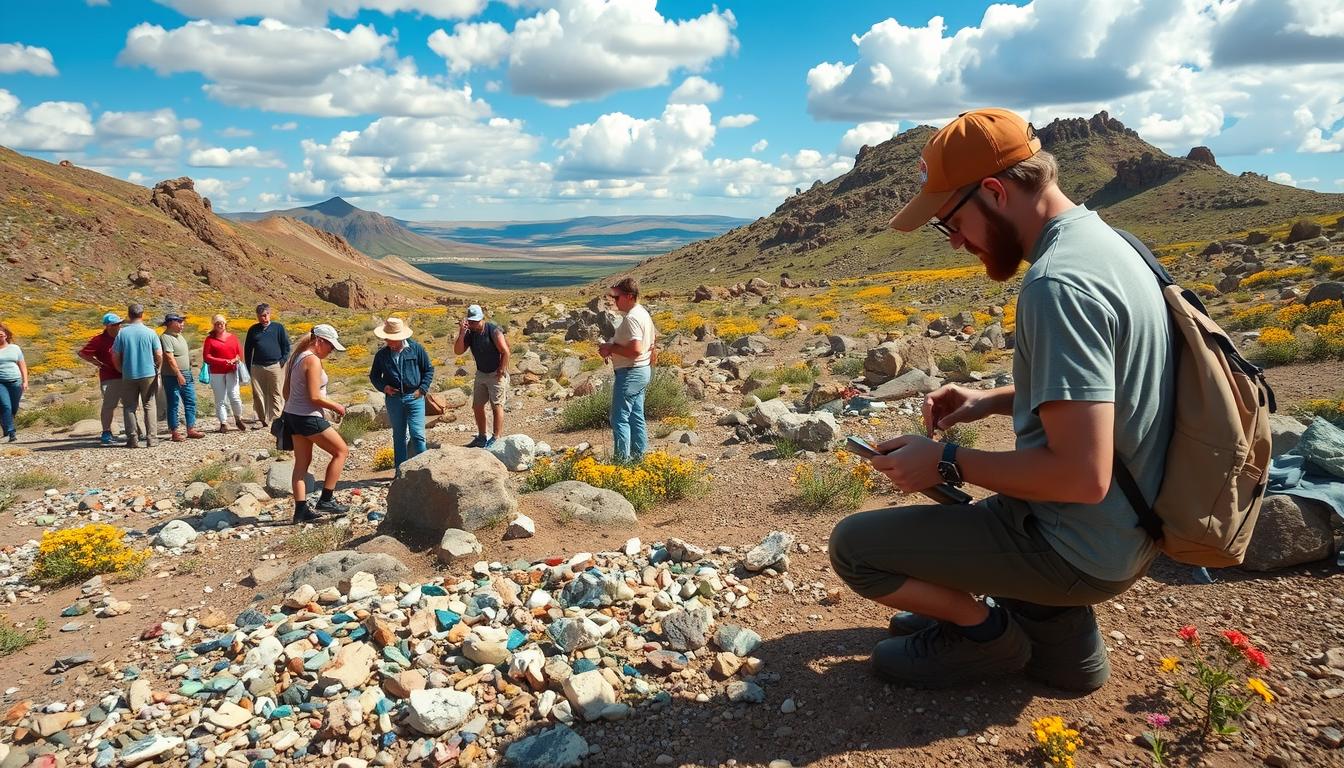
Rockhounding is a fun hobby that draws people into nature. It’s a mix of adventure and the chance to find valuable treasures. The US has many geological wonders, from Florida’s beaches to Colorado’s mountains.
With different landscapes, rockhounding offers a unique chance to find rocks, minerals, gemstones, and fossils. It’s exciting for both new and experienced collectors. The thrill of the hunt is what makes this hobby so appealing.
Key Takeaways
- Explore diverse geological formations across the US
- Discover hidden treasures, including rocks, minerals, and fossils
- Enjoy the thrill of the hunt in various landscapes, from beaches to mountains
- Learn about the unique geological features of different regions
- Experience the adventure of rockhounding on public lands
The Thrill of Rockhounding on America’s Public Lands
America’s public lands are full of chances for rockhounding fans. Millions of acres are managed by the Bureau of Land Management (BLM) and others. This means endless chances to find unique rocks, minerals, and gemstones.
From the Western deserts to the East’s mountains, public lands are diverse. They offer a wide range of geological formations to explore.
The excitement of rockhounding comes from the hunt and the joy of finding something new. It’s thrilling to discover a hidden gem or a rare mineral. Public lands let you explore new places and uncover the earth’s secrets.
What Makes Public Lands Ideal for Rock Collectors
Public lands are great for rock collectors because of their size and variety. The BLM manages over 245 million acres. This land is rich in geological history, with formations from millions of years ago.
The different terrains, from deserts to mountains, mean many environments to find rocks and minerals in.
Types of Treasures You Can Discover
Public lands hold many treasures. Some common finds include:
- Agates and jaspers
- Quartz crystals
- Precious gemstones like diamonds and rubies
- Fossils and petrified wood
- Rare minerals like turquoise and opal
For more information on finding rockhounding locations, visit Rockhounding.org.
| Type of Rock/Mineral | Common Locations | Characteristics |
|---|---|---|
| Agate | Desert regions, stream beds | Band patterns, often translucent |
| Jasper | Mountainous regions, rocky outcrops | Vibrant colors, often opaque |
| Quartz Crystals | Caves, rocky crevices | Clear or white, often in crystal form |
Legal Considerations and Regulations
Before you start rockhounding, it’s key to know the laws. The Bureau of Land Management (BLM), National Forest Service, and state parks have rules. These rules help keep rockhounding safe for the environment.
Bureau of Land Management (BLM) Rules
The BLM lets you collect rocks and minerals for personal use. But, there are rules to follow:
- Collection is for personal, non-commercial use.
- Don’t collect too much.
- Some places are off-limits for collecting.
National Forest Service Guidelines
The U.S. Forest Service manages National Forests. They have rules for rock collecting. You can usually collect rocks for personal use, but some places might be off-limits or need a permit.
- Ask local Forest Service offices for specific rules.
- Some places need a permit for collecting.
- Some areas limit motorized vehicles.
State Park Regulations
State parks have their own rules for rock collecting. These rules can change a lot from state to state. Some parks let you collect rocks, while others don’t.
- Check the park’s visitor center or website for rules.
- Some parks need a permit or have limits on what you can collect.
Collection Limits and Permits
Knowing how much you can collect and if you need a permit is important. The rules can change based on where you are, what you’re collecting, and why.
Key Considerations:
- Always check local regulations before collecting.
- Know if you need a permit for your activities.
- Respect the environment and other users of public lands.
Best Public Lands for Rockhounding in the US: Western Region
The Western United States is a treasure trove for rockhounding enthusiasts. It offers a diverse range of public lands. Here, collectors can discover unique gemstones and minerals.
From the arid deserts of California to the rich mineral deposits of Oregon, this region is a paradise. It’s a place of adventure and geological wonders.
Mojave Desert, California
The Mojave Desert is famous for its fire agate and jasper. It’s a must-visit for rockhounds. The area’s unique geology, shaped by volcanic activity and erosion, is rich in mineral treasures.
Fire Agate and Jasper Locations
Rockhounds can explore various sites in the Mojave Desert to find these gemstones. Popular locations include the Mojave National Preserve and areas around Barstow. Always follow local regulations and obtain necessary permits before collecting.
Quartzsite, Arizona
Quartzsite, Arizona, is famous for its gem and mineral shows. It attracts collectors from around the world. The area offers many collecting opportunities, with sites for agate, jasper, and other minerals.
Topaz Mountain, Utah
Topaz Mountain in Utah is a significant location for topaz mining and collecting. It offers a unique chance for rockhounds to explore a former topaz mine. Here, they can discover this beautiful gemstone.
Prineville District BLM, Oregon
The Prineville District BLM in Oregon manages a vast area rich in geological treasures. Rockhounds can explore various sites within this district. They can find a range of minerals, including agate, jasper, and thulite.
These locations in the Western United States offer rockhounding enthusiasts a chance to explore diverse geological landscapes. They can discover unique gemstones and minerals. Whether you’re a seasoned collector or just starting out, the public lands in this region provide endless opportunities for adventure and discovery.
Rocky Mountain Treasure Troves
The Rocky Mountains are full of rockhounding spots. They have many different rocks and minerals to find. Places like Colorado and Wyoming have some of the best spots in the US.
Gunnison National Forest, Colorado
Gunnison National Forest in Colorado is great for rockhounds. It has many types of rocks and minerals. You can find quartz, feldspar, and mica while exploring the trails and streams.

Custer Gallatin National Forest, Montana
Custer Gallatin National Forest in Montana is also a top spot. It’s famous for sapphire, garnet, and other gemstones. You can search for these stones in the forest’s streams and rivers.
Craters of the Moon, Idaho
Craters of the Moon National Monument in Idaho is special. It has lots of lava and different rocks. You can find obsidian, agate, and jasper on its trails.
South Pass, Wyoming
South Pass in Wyoming is known for its history and minerals. You can find gold, quartz, and more in its streams and rivers.
The Rocky Mountains are full of places to find rocks and minerals. Whether you’re new or experienced, you’ll find something exciting here.
Eastern Public Lands for Gem Hunting
The Eastern United States is full of different gemstones and minerals. It’s a great place for rockhounding fans. Even though it’s not as famous as some spots, there are many public lands to explore.
Emerald Hollow Mine
Emerald Hollow Mine is the only public emerald mine in the U.S. It’s a special place for gem hunters. You can dig for emeralds and other gems here.
Morefield Mine
Morefield Mine in Virginia is famous for its gems and minerals. You can find amethyst, quartz, and more here.
Crater of Diamonds State Park
Crater of Diamonds State Park in Arkansas is world-famous. It’s where you can find diamonds and other gems. The park’s unique geology makes it perfect for rockhounding.
Herkimer Diamond Mines
Herkimer Diamond Mines in New York are known for their quartz crystals. They call them “Herkimer diamonds.” You can explore the mine and search for these crystals.
| Location | Gemstones/Minerals | State |
|---|---|---|
| Emerald Hollow Mine | Emeralds, Quartz | North Carolina |
| Morefield Mine | Amethyst, Quartz | Virginia |
| Crater of Diamonds State Park | Diamonds, Quartz, Amethyst | Arkansas |
| Herkimer Diamond Mines | Quartz Crystals | New York |
Essential Rockhounding Equipment and Preparation
To start a rockhounding adventure, you need the right gear. The right tools make your trip better and keep you safe.
Basic Tools Every Rockhound Needs
Every rockhound needs a few essential tools. A rock hammer helps break rocks and get specimens. A hand lens lets you see your finds up close. And, sturdy shoes are key for walking on rough ground.
Seasonal Considerations
Knowing the season at your rockhounding spot is key. Weather, access, and events can change your trip. Plan ahead to make your trip better.
Maps and Resources
Maps and guides are great rockhounding resources. They show you where to go and how to find your way. For more on starting rockhounding, check out our guide on rockhounding basics.
Digital Apps for Modern Rockhounds
Today, apps help rockhounds identify minerals and find their way. They offer real-time info and tips. These digital tools make rockhounding better by giving you quick help.

Identifying and Preserving Your Finds
It’s important to know what you find and keep it safe. You can do this by identifying it in the field, cleaning it well, and storing it right.
Field Identification Techniques
Start by figuring out what you’ve found. Use a handheld magnifying glass or jeweler’s loupe to look closely. Check for color, shine, hardness, and shape to identify it.
Key characteristics to observe:
- Color and streak
- Hardness on the Mohs scale
- Luster and transparency
- Crystal shape and habit
Cleaning and Storage Methods
Cleaning your finds needs to be gentle. A soft-bristled brush and mild soap with water usually work. But, some might need special care.
| Specimen Type | Cleaning Method | Storage Tip |
|---|---|---|
| Agate, Jasper | Mild soap and water | Wrap in soft cloth |
| Crystals | Soft brush, avoid harsh chemicals | Store in padded containers |
| Fossils | Gentle brushing, avoid water | Keep in dry, stable environment |
Documenting Your Discoveries
Writing down your finds is key. Keep a journal of your rockhounding adventures. Note the location, date, and details of each find.
By following these steps, you’ll make sure your finds are well-kept and documented. This will make your rockhounding journey even better.
[link-whisper-related-posts]Conclusion
Rockhounding sites across the US are full of adventure and learning. You can find rare gemstones and fascinating fossils. There are many places to explore, making it exciting for everyone.
The hobby of rockhounding draws people from all over. By going to the best places for rockhounding, you can feel the excitement. You’ll also get to find hidden treasures.
What is rockhounding, and where can I do it in the US?
Rockhounding is collecting rocks, minerals, and gemstones. The US has many places for this hobby. You can find national forests, BLM lands, and state parks.
What are the regulations for rockhounding on public lands?
Rules change based on where you are. The BLM lets you collect for personal use, but with some limits. National Forest Service and state parks have their own rules too.
What are some of the best public lands for rockhounding in the Western US?
Places like the Mojave Desert in California and Quartzsite in Arizona are great. Topaz Mountain in Utah and the Prineville District BLM in Oregon are also good spots.
Are there good rockhounding opportunities in the Eastern US?
Yes, the East has many places to rockhound. Try Emerald Hollow Mine in North Carolina or Morefield Mine in Virginia. Crater of Diamonds State Park in Arkansas and Herkimer Diamond Mines in New York are also good.
What are the essential tools and equipment for rockhounding?
You’ll need a rock hammer, hand lens, and good shoes. Maps and guides, digital or paper, help find and navigate places.
How do I identify and preserve my rockhounding finds?
Use field techniques to figure out what you’ve found. Clean and store your finds carefully. Keeping notes and photos of your finds makes the hobby more fun.
Can I collect rocks and minerals for commercial purposes on public lands?
For commercial use, you need special permits. Check with the agency for specific rules.
Are there any seasonal considerations for rockhounding?
Yes, weather and access can change. Knowing these can help plan your trips better.

Subscribe to Our Newsletter