Rock collecting is a fun hobby that needs careful storage of rocks. Proper storage solutions are key to keep rocks safe and in good shape.
The right containers are very important for keeping rocks safe for a long time. By picking the right storage, collectors can keep their rocks looking great.
Key Takeaways
- Proper storage is key for keeping rock collections safe.
- The right containers help keep specimens in good shape.
- Rock collectors should pick storage that fits their needs.
- Storage options change based on rock type and size.
- Good storage helps keep the value of rock collections.
Why Proper Storage Matters for Your Rock Collection
Storing your rocks right is key to keeping them in top shape. Good storage keeps your collection looking great. It also guards against damage and wear.
Protecting Specimens from Damage
Bad storage can hurt your rocks, like chipping or cracking. Durable rock storage bins or containers with separate spots help. They stop rocks from bumping into each other and getting damaged.
Maintaining Mineral Properties
Some minerals don’t like humidity or light. Keeping them in rock collection containers that keep things steady is important. For example, some minerals might fade or change if they get too wet.
| Storage Method | Benefits | Drawbacks |
|---|---|---|
| Individual Compartment Containers | Prevents specimen damage | Can be expensive |
| Stackable Storage Bins | Space-efficient, durable | May not protect fragile specimens |
Types of Rock Collections and Their Storage Needs
Rock collectors have many types of collections. They range from small minerals to big geodes and crystals. Each needs its own storage solution.
Small Mineral Specimens
Small minerals need safe storage to avoid damage. Compartmentalized storage boxes are great. They keep specimens organized and safe.
Large Geodes and Crystals
Big geodes and crystals need strong storage. Display cases or wooden crates are best. They support the weight and protect the specimens.
Tumbled Stones and Polished Rocks
Tumbled stones and polished rocks need care. Soft-lined storage containers or velvet-lined display cases are perfect. They cushion the rocks and prevent scratches.
Here’s a table that shows what storage each type of rock needs:
| Type of Rock Collection | Storage Needs |
|---|---|
| Small Mineral Specimens | Compartmentalized storage boxes |
| Large Geodes and Crystals | Sturdy display cases or wooden crates |
| Tumbled Stones and Polished Rocks | Soft-lined storage containers or velvet-lined display cases |
Best Containers for Storing Collected Rocks: Top Options
Choosing the right container is key for keeping rocks in good shape. It should protect them, keep their mineral properties, and make them easy to organize and show off.
Plastic Compartment Organizers
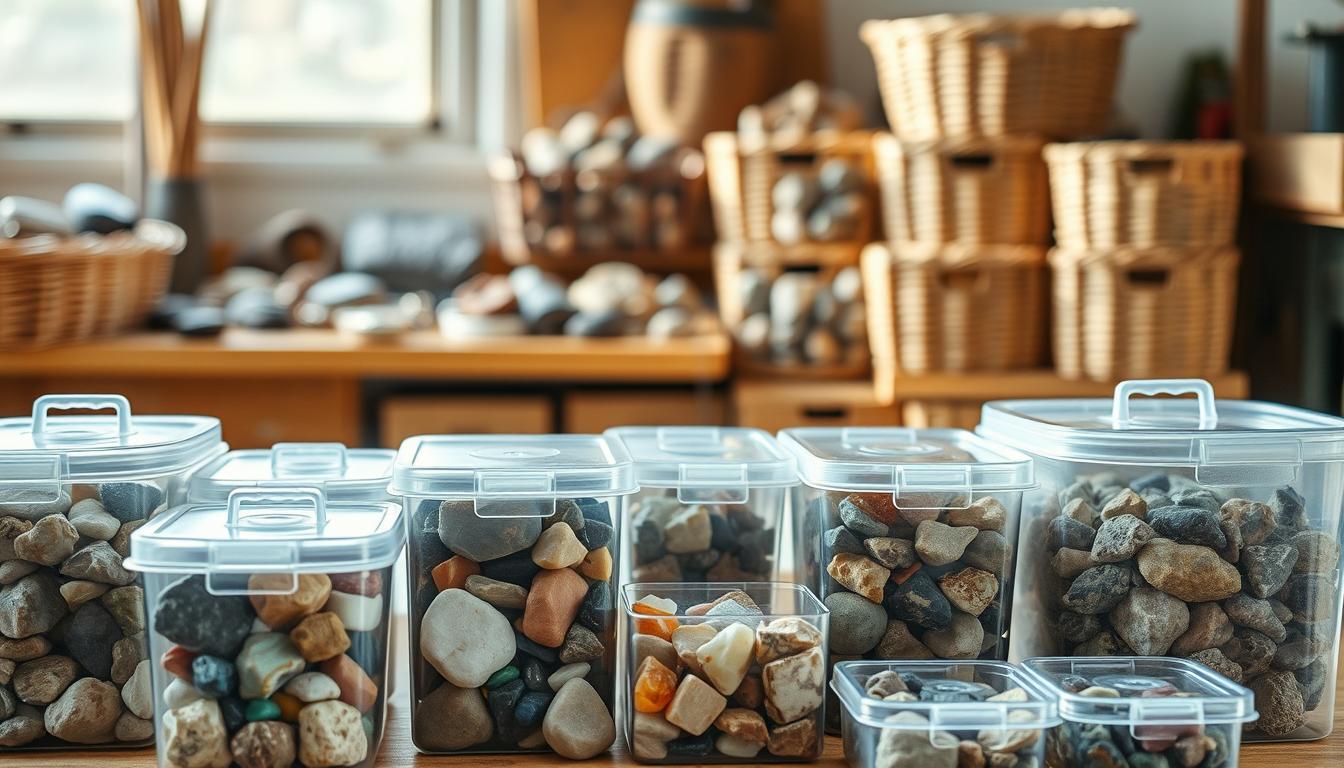
Plastic compartment organizers are great for small to medium rock collections. They have many compartments to sort and keep different rocks apart. The clear plastic material lets you see what’s inside without opening it.
These organizers keep rocks tidy and safe from damage. They’re also cheap and can fit in a drawer or on a shelf.
Wooden Display Cases
Wooden display cases are perfect for showing off rocks. They can be made to fit any rock size or shape. The wooden material also brings out the natural beauty of the rocks.
These cases are best for bigger or more special rocks. They make a beautiful display that highlights each rock’s unique features.
Metal Storage Tins
Metal storage tins are good for keeping rocks dry and safe. They’re strong and can be stacked, which is great for big collections. They’re also airtight rock storage options.
| Container Type | Benefits | Suitable For |
|---|---|---|
| Plastic Compartment Organizers | Clear visibility, organized storage | Small to medium-sized rock collections |
| Wooden Display Cases | Elegant display, customizable | Large or decorative rock specimens |
| Metal Storage Tins | Airtight, durable, stackable | Larger collections, moisture-sensitive rocks |
Clear Storage Solutions for Visual Display
Rock collecting is all about showing off your finds. Clear storage lets you do just that. It keeps your rocks safe and organized. Plus, it’s great for those who love how their collection looks.
Benefits of Clear Storage include seeing your rocks from all sides without opening the box. This makes looking at them more fun. It also helps avoid breaking your rocks.

Glass-Top Display Boxes
Glass-top display boxes are classy and elegant. They let you see your rocks clearly. They also keep them safe from dust and harm.
- Provide protection from dust and damage
- Allow for multi-angle viewing
- Add an aesthetic touch to the display
Acrylic Specimen Boxes
Acrylic specimen boxes are light, won’t break easily, and are cheaper than glass. They work well with many types of rocks.
- Lightweight and portable
- Shatter-resistant for added safety
- Affordable and versatile
Clear Stackable Drawers
Clear stackable drawers are handy for storing and showing off your rocks. They help keep your collection neat and in one place.
- Compact and space-efficient
- Easy to organize and access specimens
- Provide clear visibility of stored rocks
Durable Options for Heavy Rock Collections
Heavy rock collections need strong storage. This is to avoid damage and keep the rocks safe for a long time.
Heavy-Duty Plastic Bins
Heavy-duty plastic bins are great for heavy rock collections. They are made to hold a lot of weight without breaking. Plus, they can stack up, saving space.
When picking these bins, look for ones with strong walls and tight lids. This helps keep the bins closed and safe.
Metal Cabinets and Drawers
Metal cabinets and drawers are also good for heavy rock collections. They are strong and help keep things organized. With many drawers, you can sort your rocks easily.
Make sure the metal doesn’t rust. This keeps your rocks in top shape.
Reinforced Storage Crates
For the heaviest needs, go for reinforced storage crates. They are built for heavy loads and used in industrial places. You can add dividers and padding to protect your rocks.
Environmental Considerations for Rock Storage
Keeping your rock collection in the right environment is key. The place where you store your rocks matters a lot. Things like humidity, temperature, and light can affect how well your rocks stay.
Humidity Control Solutions
It’s important to control humidity to protect your rocks. Too much humidity can cause mold and mildew. Too little can dry out or crack some minerals. To keep humidity right, use dehumidifiers or humidistats in your storage area.
For very sensitive rocks, use sealed containers with silica gel or other desiccants. Check the humidity with a hygrometer often. This helps you adjust as needed.
Temperature and Light Protection
Changes in temperature can make rocks expand and contract. This can cause them to crack. Store your rocks in a place with a stable temperature. Aim for 60°F to 75°F (15°C to 24°C).
Light is also important. Direct sunlight or bright artificial light can make some minerals fade or change color. Use UV-filtering glass or acrylic for display cases. Keep rocks away from direct sunlight and use low-intensity lighting if needed.

Organizing and Labeling Your Rock Collection
Organizing a rock collection needs careful planning. It involves using good classification systems, labeling methods, and digital ways to keep track.
Classification Systems
A strong classification system is key to a well-organized rock collection. You can sort rocks by mineral type, where they came from, or how they look. For example, you might group rocks by their minerals, like quartz or feldspar, or by how they formed, such as igneous or sedimentary.
Labeling Methods and Materials
Labeling is very important for organizing rocks. You can use handwritten, printed, or digital labels. The material matters too; you can choose paper, plastic, or metal labels. For example, acid-free paper labels help keep your specimens safe.
Digital Cataloging Options
Digital cataloging is also a great tool for rock collectors. It lets you search, sort, and track your collection easily. Digital tools can store images and give detailed descriptions, making your collection easier to manage.
Using these methods, rock collectors can keep their collections organized and easy to access. This way, they can enjoy their specimens fully.
[link-whisper-related-posts]Conclusion
Storing rocks right is key to keeping them safe and looking good for a long time. By picking the Best Containers for Storing Collected Rocks, you protect them from harm. This way, their natural beauty stays intact.
Using portable rock storage bins and other good containers helps keep your collection tidy. It also makes it easy to find what you need. Think about what your rocks need, like keeping the right humidity and protecting them from light.
Following the tips in this article helps you make a rock collection that will last for years. It will stay organized and preserved beautifully.
FAQ
What is the best way to store small mineral specimens?
Store small mineral specimens in plastic organizers or glass vials. This keeps them safe from damage and dust.
What type of storage is suitable for large geodes and crystals?
Use wooden display cases or heavy-duty plastic bins for large geodes and crystals. They need strong storage to avoid damage.
How can I protect my rock collection from humidity?
Use silica gel packets or dehumidifiers to control humidity. This helps keep your rocks safe from damage.
What are the benefits of using clear storage solutions for my rock collection?
Clear storage like glass or acrylic boxes lets you see your rocks. It makes them easy to identify and display.
How can I organize and label my rock collection?
Use systems, labels, and digital catalogs to organize your rocks. This makes them easy to find and enjoy.
What are the best containers for storing tumbled stones and polished rocks?
Metal tins or clear drawers are great for tumbled stones and polished rocks. They protect and organize your collection.
How can I protect my rock collection from extreme temperatures and light?
Keep your rocks in a cool, dry spot away from sunlight. Use UV-filtering glass or acrylic to shield them from light.

Subscribe to Our Newsletter