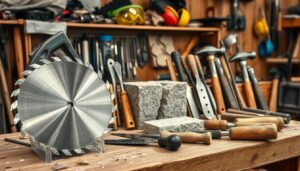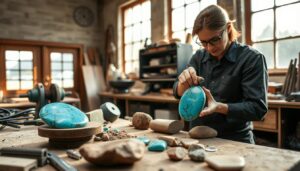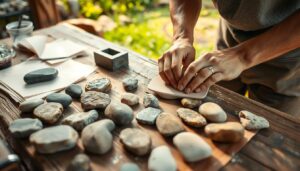
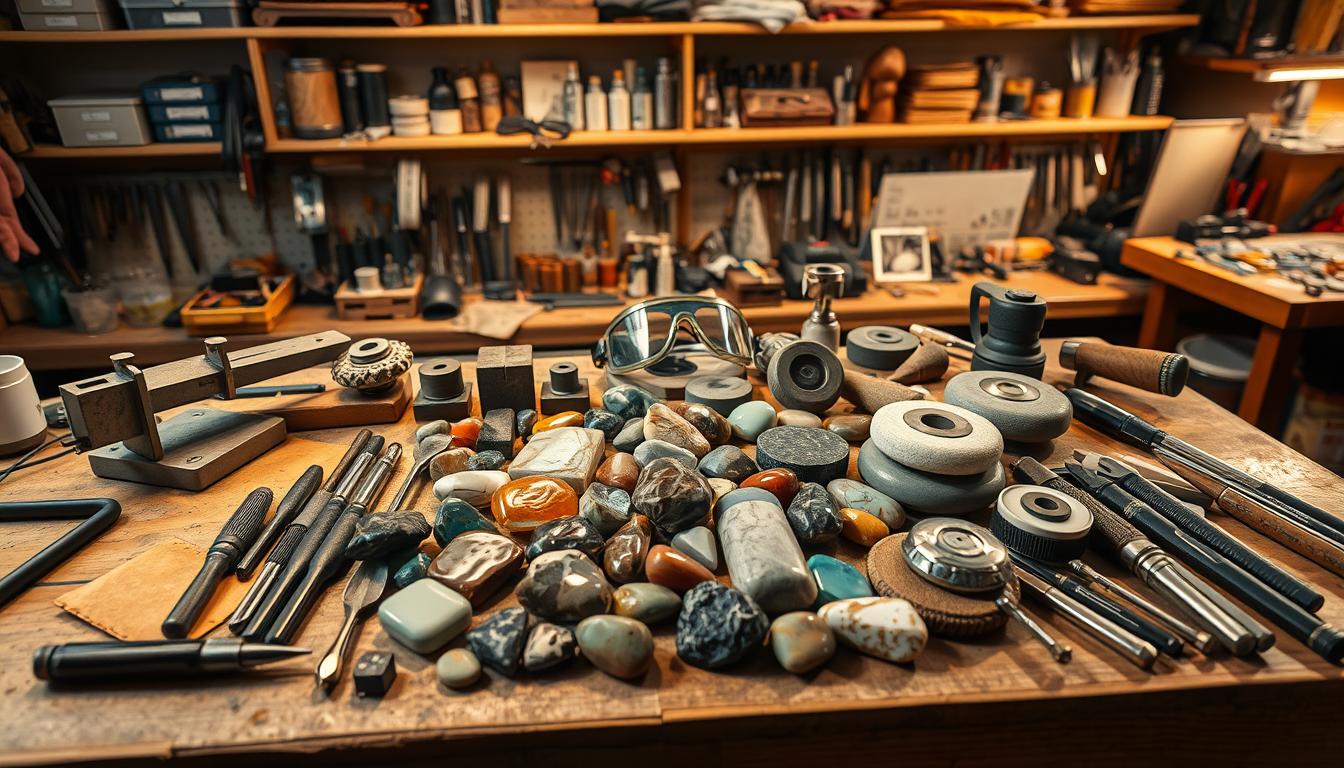
Lapidary is the art of cutting, shaping, and polishing gemstones. To start, you need to know about the lapidary tool kit.
Getting the right tools is key for great results and learning. For newbies, knowing the tools is the first step. It helps in making beautiful gemstones.
Key Takeaways
- Understanding the basics of lapidary is essential for beginners.
- A lapidary tool kit is key for cutting, shaping, and polishing gemstones.
- Investing in the right tools makes learning better.
- Essential tools help achieve professional results.
- A well-equipped lapidary workspace is vital for creativity and precision.
The Fundamentals of Lapidary Work for Beginners
The world of lapidary is fascinating. It needs a solid understanding of its basics for beginners. Lapidary involves cutting, grinding, and polishing gemstones. These steps are key to making beautiful jewelry or decorative items.
What Is Lapidary and Its Different Forms
Lapidary is the art of cutting, shaping, and polishing stones and gems. It includes cabbing, faceting, and carving. Cabbing shapes stones into rounded forms. Faceting cuts stones to show their brilliance.
Knowing these forms is key for beginners. It helps them find their interest and the tools they need.
Understanding the Basic Lapidary Process
The basic lapidary process has several steps. It starts with cutting the rough stone. Then, it involves grinding and shaping the stone with different grits and laps.
Lastly, the stone is polished to a high shine. For more info on lapidary processes, check out this article on lapidary techniques.
Knowing these steps is vital for beginners. It helps them understand the work and choose the essential lapidary tools for their projects. By learning the basics, beginners can pick the best lapidary tools for beginners to invest in.
Essential Safety Equipment for Gemstone Work
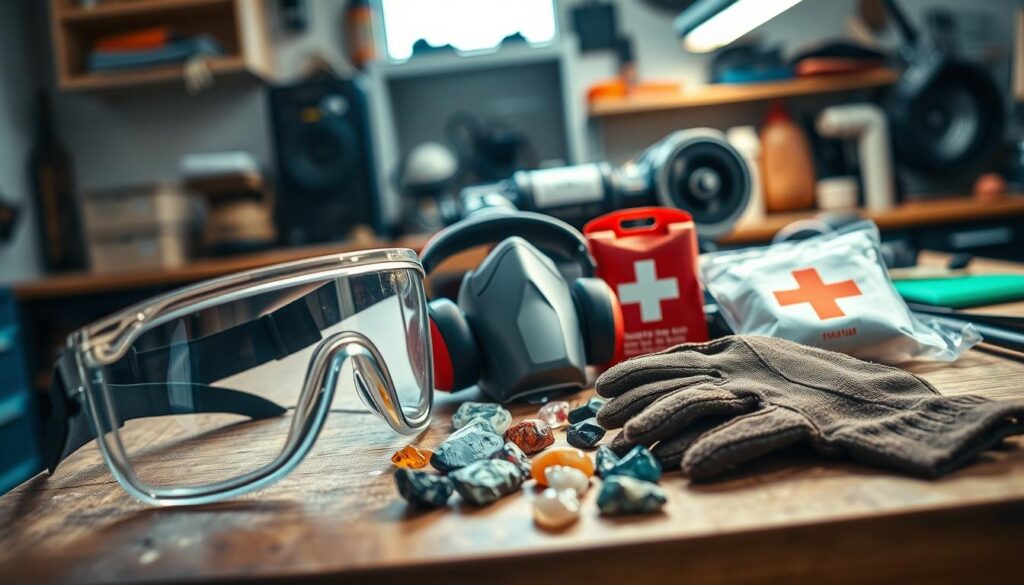
Beginners need to get the right safety gear for a safe workspace. Lapidary work has dangers like flying debris, dust, and loud noises. These can cause serious harm if you don’t take the right steps.
Eye and Face Protection Options
Eye safety is key in lapidary work. Safety goggles and face shields are a must to avoid flying particles. Choose goggles that fit well and have polycarbonate lenses for the best protection.
Respiratory Protection for Stone Dust
Stone dust can harm your lungs. A dust mask or respirator can help a lot. Pick a respirator with a high filtration rating for the best protection.
Protective Clothing and Hand Safety
Wearing protective clothing like long sleeves and gloves helps prevent skin problems and injuries. Gloves also help you grip stones and tools better.
- Wear long sleeves and pants to cover skin
- Use gloves for handling stones and equipment
- Choose clothing that is comfortable and allows for ease of movement
Beginner Lapidary Tools You Actually Need
Starting with lapidary work means knowing the right tools. It’s about cutting, shaping, and polishing stones. You’ll need special tools for this. As a beginner, getting the right tools is key for good work and safety.
Cutting Tools: Trim Saws and Slabbing Options
Cutting tools are a must in lapidary. Trim saws help cut and shape stones. Slabbing saws cut stones into thin slabs. Pick a trim saw based on the stone size and type you’ll work with.
Some top cutting tools include:
- Trim saws with diamond-coated blades
- Slabbing saws for cutting stones into thin slabs
Grinding and Shaping Equipment
Grinding and shaping are key steps. Grinders and cabbing machines shape stones. Choose grinding tools based on power and speed for your projects.
| Equipment | Purpose | Key Features |
|---|---|---|
| Cabbing Machine | Shaping stones | Variable speed, water cooling |
| Grinder | Grinding stones | High-speed motor, diamond-coated wheels |
Sanding and Polishing Tools
Sanding and polishing finish the work. Stones are smoothed and shine. Sanding tools go from coarse to fine. Polishing tools use compounds for shine.
Key sanding and polishing tools are:
- Sanding wheels in various grits
- Polishing wheels with felt or leather
- Polishing compounds
Essential Hand Tools for Precision Work
Hand tools are key for detailed work. They do what machines can’t.
Measurement and Marking Tools
Accurate measurement and marking are vital. Calipers and marking pens help measure and mark stones.
Holding and Manipulation Tools
Tools like dop sticks and wax hold stones during work. They’re used for cutting, grinding, and polishing.
Getting these tools is a good start for lapidary. The quality of your tools affects your work’s quality.
Creating Your First Lapidary Workshop
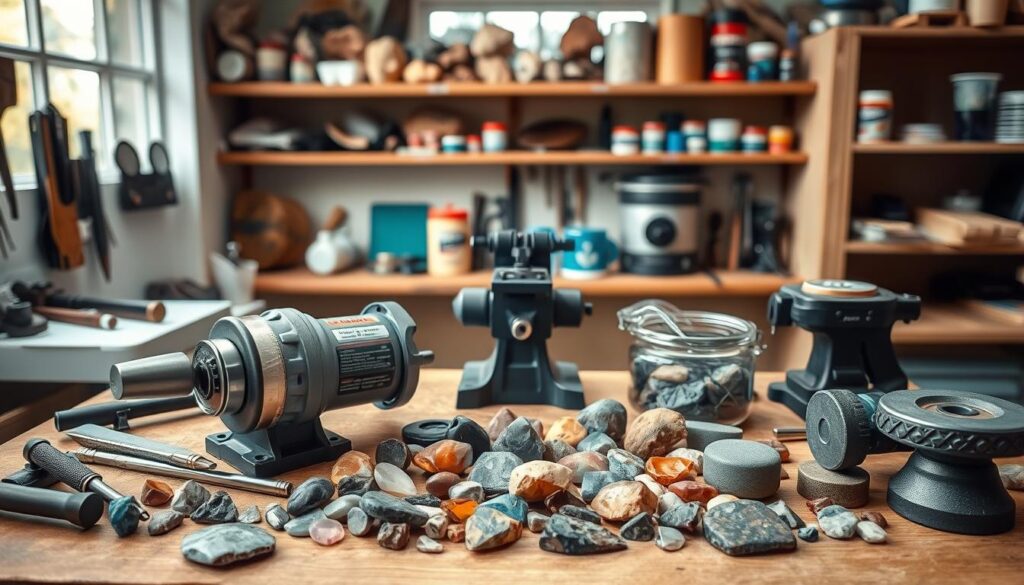
A well-organized lapidary workshop is key for safe and efficient gemstone processing. You need to think about space, organization, water use, and tool buying.
Space Requirements and Organization
Setting up your workshop needs enough space for your tools and work area. A clean space boosts productivity and safety. Organize your area into zones for cutting, grinding, and polishing.
Water Management and Waste Disposal
Good water management is important in a lapidary workshop. Use a drainage system and recycle water when you can. Also, plan how to get rid of waste like stone dust and slurry.
Budget-Friendly Tool Acquisition Strategies
Getting the tools you need doesn’t have to be expensive. Look for both new and used tools. Here are some tips:
- Search online for used lapidary tools
- Go to lapidary club meetings or auctions
- Buy tools that can do more than one thing
New vs. Used Equipment Considerations
Choosing between new and used tools depends on cost, condition, and warranty. Used tools can save money but might need fixing or maintenance.
Multi-Purpose Tools for Beginners
For newbies, buying multi-purpose tools is smart. These tools do several jobs, saving you money on buying lots of special tools.
| Tool | Function | Cost Estimate |
|---|---|---|
| Trim Saw | Cutting gemstones | $200-$500 |
| Grinder | Shaping gemstones | $150-$300 |
| Sander/Polisher | Sanding and polishing | $100-$250 |
Conclusion: Taking Your First Steps in Lapidary
Starting your lapidary journey needs the right tools and equipment. With the beginner lapidary tools info, you’re ready to begin. Knowing the basics and having the right tools is key to making beautiful gemstones.
As you start, look into the world of gemstones and their value. For more on gemstone value, check out Folk Market Gems for insights on the gemstone market.
Getting the right tools for beginners will improve your skills. You’ll enjoy turning rough stones into beautiful art pieces.
FAQ
What are the most essential lapidary tools for beginners?
Beginners need a trim saw, grinding wheels, and sanding and polishing tools. Hand tools like a cabbing or faceting machine are also key.
What safety equipment is necessary for lapidary work?
You need eye protection, face shields, and dust masks. Don’t forget gloves and an apron for your clothes.
Can I start lapidary work without a dedicated workshop?
Yes, you can start without a workshop. Just make sure your space is well-ventilated and organized.
What are the best lapidary tools for cabbing and faceting?
For cabbing, you’ll need a cabbing machine, grinding wheels, and polishing tools. Faceting requires a faceting machine, dop sticks, and a protractor.
How do I choose the right lapidary saw for my needs?
Think about the material you’ll cut, the saw’s size, and if it’s electric or manual. Trim and slabbing saws are common choices.
What are some budget-friendly options for acquiring lapidary tools?
Look for used or refurbished tools, sales, and entry-level kits. These can save you money.
How do I maintain and care for my lapidary equipment?
Clean your tools regularly and check for wear. Follow the maker’s care instructions. Proper storage and handling also matter.
What are some common mistakes beginners make in lapidary work?
Don’t skip safety, use the right tools, and keep your equipment in good shape. Be patient and don’t rush.

Subscribe to Our Newsletter