Sedimentary rocks are made when weathered, eroded, and deposited materials get pressed together. This happens under the weight of more sediments. This process makes a wide variety of rocks with special features.
Sedimentary rocks can have many minerals and rock pieces in them. This tells us a lot about the Earth’s past. Knowing the different kinds of sedimentary rocks helps us spot them right.
Key Takeaways
- Sedimentary rocks are formed through compaction and cementation.
- They can be composed of various minerals and rock fragments.
- Understanding sedimentary rocks is essential for identifying them accurately.
- Sedimentary rocks provide valuable information about the Earth’s history.
- Different types of sedimentary rocks have unique characteristics.
The Three Main Categories of Sedimentary Rocks
Sedimentary rocks are divided into three main types. They are classified based on how they form. Knowing these types helps us understand and identify sedimentary rocks.
Clastic Sedimentary Rocks
Clastic rocks come from broken-down rocks. These pieces can be tiny or very large. The process involves:
- Erosion of existing rocks
- Transportation of sediments
- Deposition in a new location
- Compaction and cementation of sediments
Examples include conglomerate, sandstone, and shale. Their texture and size tell us about their origin.
Chemical Sedimentary Rocks
Chemical rocks form when minerals settle out of a solution. This happens in places like lakes and caves. Examples are:
- Limestone, made of calcium carbonate
- Rock salt, made of halite
- Gypsum, made of hydrated calcium sulfate
These rocks show us what the environment was like when they formed.
Organic Sedimentary Rocks
Organic rocks come from living things. These can be plants or animals that lived in swamps or oceans. Over time, they turn into rock. Examples are:
- Coal, made from plants
- Limestone (some types), made from marine life
These rocks are important because they often have fossils. Fossils help us learn about Earth’s past.
In summary, sedimentary rocks are divided into clastic, chemical, and organic types. Each type forms differently and has unique features. Knowing these differences is key to identifying and understanding sedimentary rocks.
Essential Tools for Beginner Rock Identification
Starting your journey to become a rock identifier is exciting. You need the right tools, knowledge, and practice. Identifying sedimentary rocks is a mix of these.
Basic Field Equipment
When you go out to find sedimentary rocks, you need the right gear. Here are some key tools:
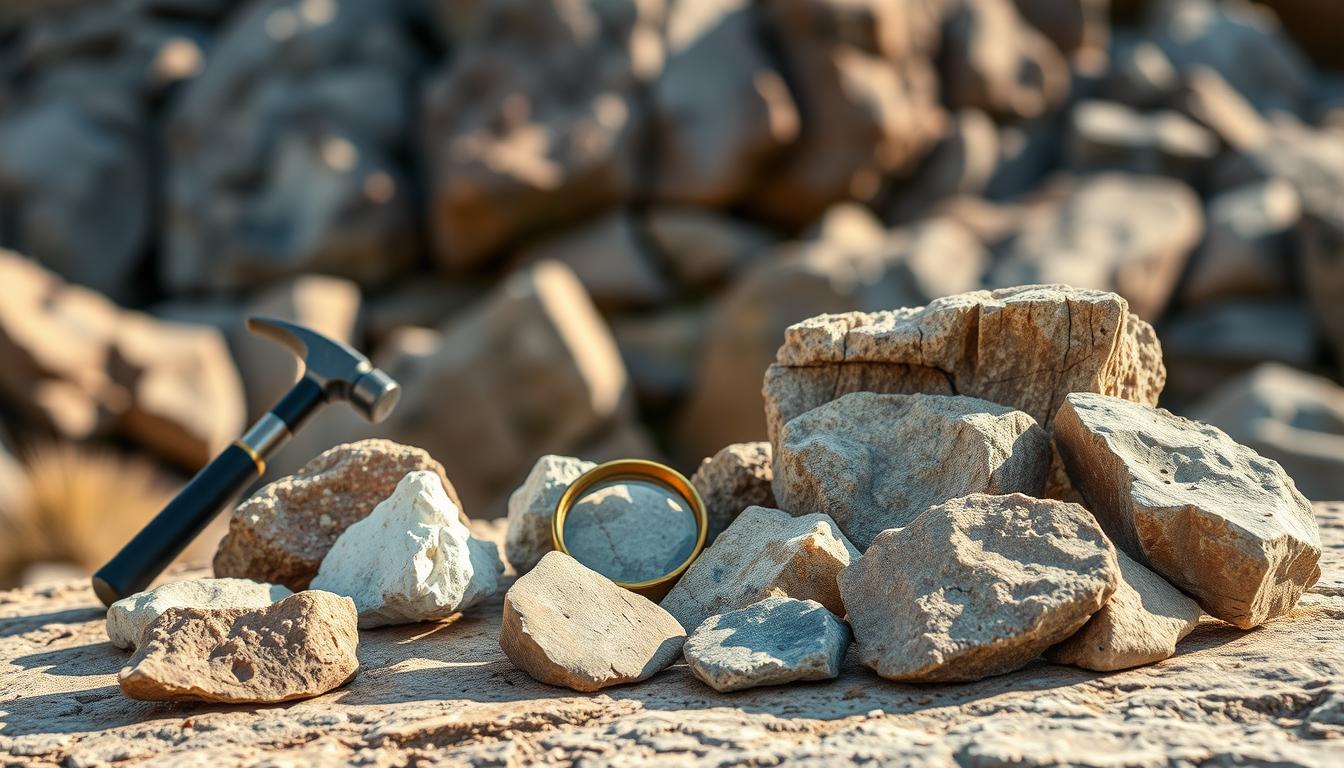
- A rock hammer or geologist’s hammer, used to break rocks and show fresh surfaces.
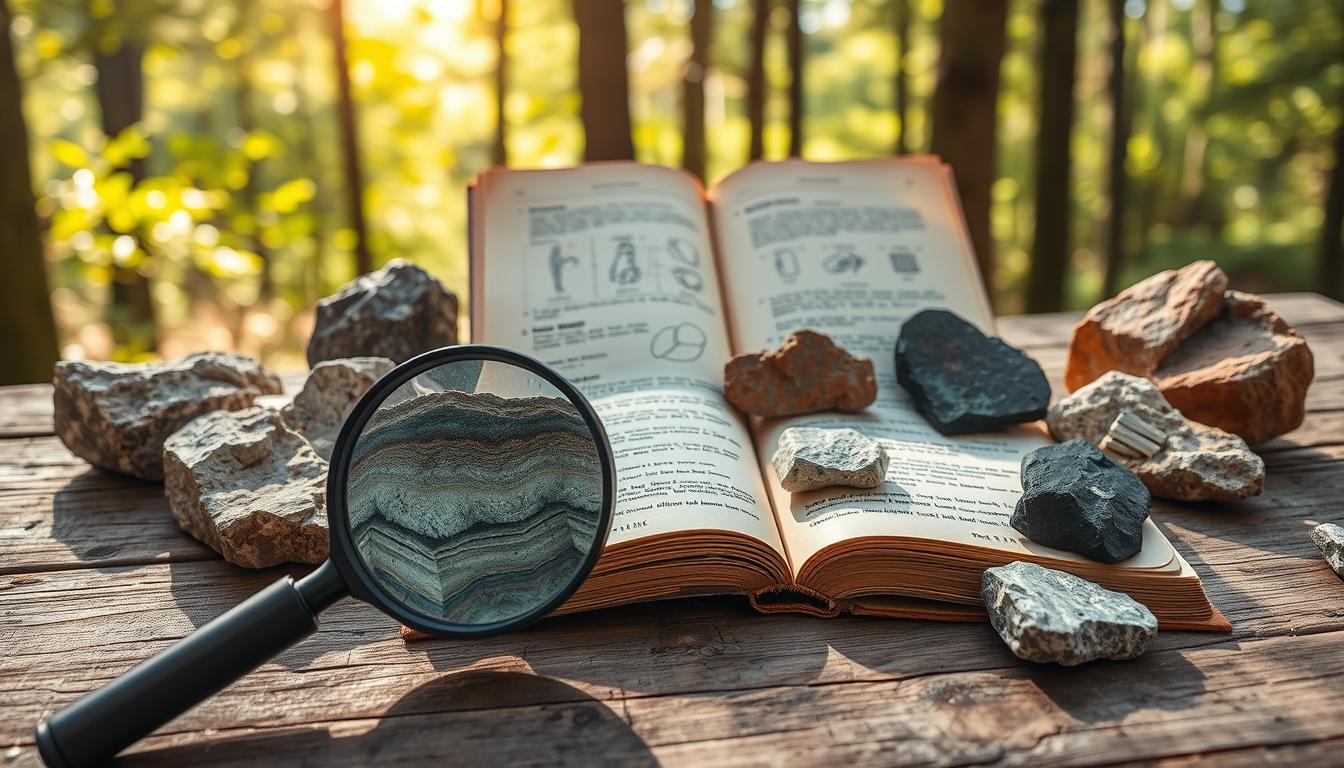
- A hand lens or magnifying glass, for a closer look at the rock’s texture and minerals.
- A streak plate, to find the rock’s streak color, a key identification feature.

Reference Materials and Apps
Along with basic tools, reference materials and apps are great for identifying rocks. For more on rock identification, check out our guide on how to identify rocks and stones. Useful resources include:
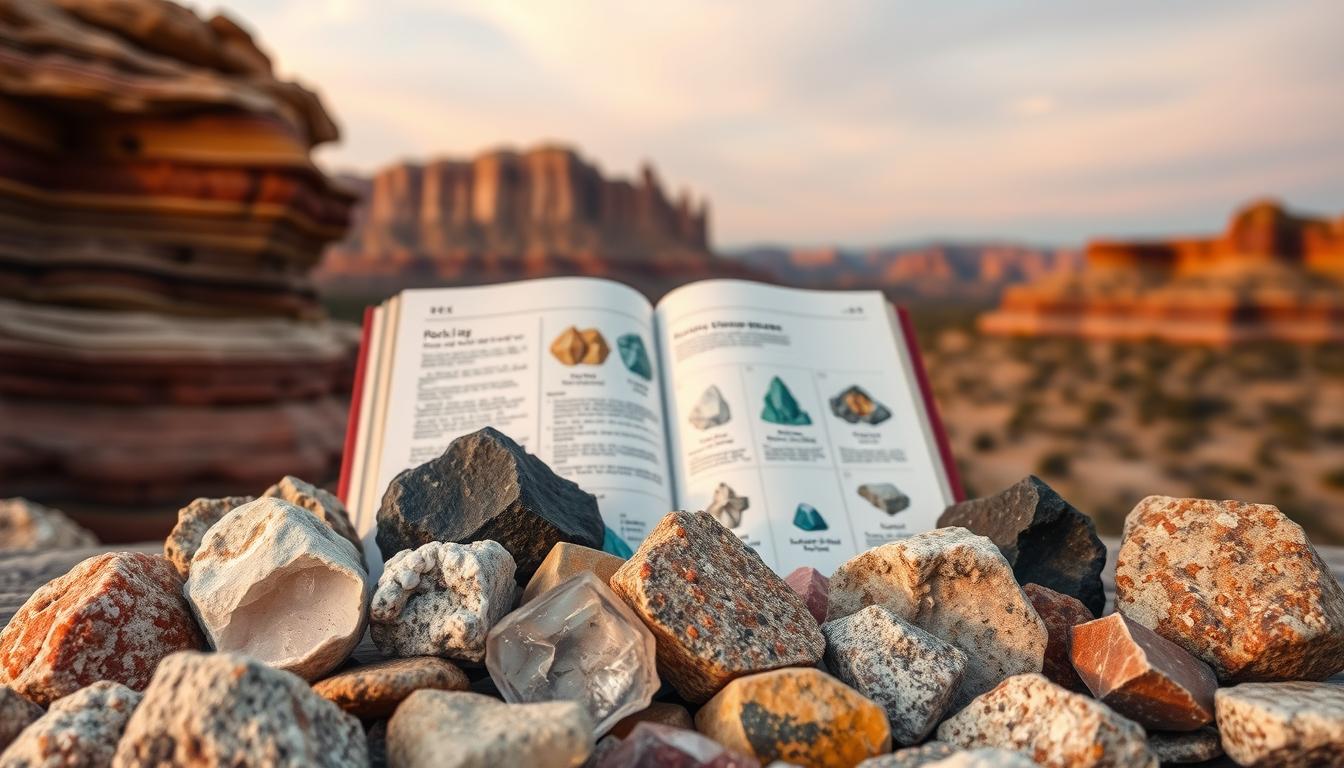
- Field guides with detailed descriptions and photos of different sedimentary rocks.
- Geological maps to understand the area’s geological background.
- Apps for quick rock identification, based on texture, color, and minerals.
Using these tools and resources, beginners can improve their rock identification skills.
Key Characteristics for Identifying Sedimentary Rocks
Identifying sedimentary rocks means looking at their key traits. These traits tell us about their origin and makeup. It’s vital for rock lovers, geologists, and anyone curious about Earth’s past.
Texture and Grain Size
The texture and grain size of sedimentary rocks help figure out their type. Texture shows how mineral grains and particles are arranged. Grain size is the size of these particles. Rocks can range from coarse-grained conglomerates to fine-grained shales.
- Coarse-grained rocks have big grains and particles.
- Fine-grained rocks have tiny particles that need a magnifying glass to see.
The grain size depends on where the rock formed. High-energy places like rivers and beaches make coarser sediments. Low-energy spots like lakes and swamps make finer sediments.

Color and Mineral Composition
The color and minerals in sedimentary rocks are key. Colors can be bright reds and oranges or dull grays and blacks. Minerals like iron oxide make rocks red, while carbonates make them white or cream.
The minerals in sedimentary rocks tell us about their origin. For example, rocks with quartz and feldspar often come from continents. Rocks with calcium carbonate usually come from the sea.
Layering and Bedding Features
Sedimentary rocks show layering and bedding due to how they formed. These layers can be thin or thick. They help us understand the rock’s history, like where it formed and any tectonic changes.
- Cross-bedding shows the direction of currents.
- Graded bedding means energy decreased over time.
Fossil Content
Fossils in sedimentary rocks are very important. They can be simple bacteria or complex plants and animals. Fossils help us date the rock and link it with others of the same age.
Fossils also tell us about the rock’s environment. Marine fossils mean the rock formed in the sea. Freshwater fossils mean it formed in a non-marine area.
Common Sedimentary Rocks and How to Identify Them
Knowing the different sedimentary rocks is key for rock lovers. These rocks form from sediments that settle and stick together. They tell us a lot about Earth’s past.
Sandstone
Sandstone is made of sand-sized pieces or rock bits. It feels coarse and might show quartz or feldspar grains.
Sandstone’s color changes based on minerals like iron oxide. Look for its gritty feel and sand-sized grains to spot it.
Limestone
Limestone is mostly calcium carbonate from marine life. It’s a chemical rock.
It fizzes with hydrochloric acid. Limestone is usually white but can be gray or tan.
Shale
Shale is made of fine mud with clay and tiny minerals. It breaks into thin sheets.
Shale is often gray or black. It can also be other colors.
Conglomerate
Conglomerate has big gravel and pebbles stuck together. It’s a coarse rock.
The big clasts in conglomerate are rounded. They show they’ve been moved by water or ice. It’s known for its mix of big and small parts.
Coal
Coal comes from old plants buried deep. It’s black and burns well.
Coal can be soft or hard. Its hardness changes with its rank.
Learning about these rocks helps fans identify them. Each rock has special signs that help with identification.
Identifying Sedimentary Rocks in the Field
Identifying sedimentary rocks in the field starts with finding the right places. These rocks are found in rivers, lakes, and oceans. They form when sediments pile up over time.
Where to Find Sedimentary Rocks
Sedimentary rocks are common in areas with lots of sediment. Look for them in:
- Riverbanks and valleys
- Lake beds and shorelines
- Coastal cliffs and beaches
- Mountainous regions with visible strata
Key locations often have exposed rock formations. This makes it easier to spot and identify sedimentary rocks.
Step-by-Step Identification Process
To identify sedimentary rocks, follow these steps:
- Observe the rock’s texture and grain size.
- Note the color and mineral composition.
- Examine the layering and bedding features.
- Check for fossil content.
Careful observation is key to telling different sedimentary rocks apart.
Common Mistakes to Avoid
When identifying sedimentary rocks, avoid these mistakes:
- Misidentifying rock types based on color alone.
- Failing to examine the rock’s texture and grain size.
- Not considering the geological context.
Knowing these common mistakes helps you better identify sedimentary rocks in the field.
[link-whisper-related-posts]Conclusion
Sedimentary rock identification is more than just knowing different types of rocks. It’s about learning the stories of our planet’s past. In this guide, we’ve covered the basics of identifying sedimentary rocks.
Sedimentary rocks are mainly divided into clastic, chemical, and organic types. Each has its own features. Knowing these and using basic tools and references helps in identifying rocks.
Key Characteristics of Sedimentary Rocks:
| Characteristic | Description | Examples |
|---|---|---|
| Texture and Grain Size | Variability in grain size and texture | Sandstone, Conglomerate |
| Color and Mineral Composition | Diverse colors and mineral compositions | Limestone, Shale |
| Fossil Content | Presence of fossils indicating age and environment | Fossiliferous Limestone, Coal |
If you’re new to rock collecting and geology, there’s a lot to learn. Check out beginner’s guides for more info.
Keep practicing and being patient as you learn about sedimentary rocks. The more you learn, the more you’ll discover about Earth’s history.
Additional Resources
Want to learn more about sedimentary rocks? There are many resources to help you.
Books like “Rocks and Minerals” by The Smithsonian Institution and “Peterson Field Guide to Rocks and Minerals” by Frederick H. Pough are great. They give detailed info on identifying different sedimentary rocks.
The United States Geological Survey (USGS) website is also a great place to start. It has lots of info on how sedimentary rocks form and how to identify them. Online forums and geological societies are also good places to meet experts and learn more.
For the latest research, check out scientific journals like the Journal of Sedimentary Research and Geology. Reading these articles can make you better at identifying sedimentary rocks.
FAQ
What are sedimentary rocks and how are they formed?
Sedimentary rocks come from the buildup and press of sediments. These sediments include mineral particles, rock pieces, and organic stuff. They form through erosion, deposition, and turning into solid rock.
What are the three main categories of sedimentary rocks?
Sedimentary rocks are mainly divided into three types. Clastic rocks are made from broken rock pieces. Chemical rocks form when minerals settle out. Organic rocks come from living things.
How do I identify sedimentary rocks in the field?
To spot sedimentary rocks, look at their texture, grain size, and color. Check for layering and fossils too. Use simple tests and reference books to help.
What are some common sedimentary rocks and how can I distinguish between them?
Common rocks include sandstone, limestone, and shale. Look at their texture and mineral makeup. Also, check for fossils and layering to tell them apart.
What are some essential tools for identifying sedimentary rocks?
You’ll need a rock hammer, hand lens, and magnifying glass. Also, have field guides, maps, and apps handy.
How can I avoid common mistakes when identifying sedimentary rocks?
Be careful and use all the clues you can find. Check your work against what experts say. Know where you are and the rock’s setting.
Where can I find sedimentary rocks?
Look for them in outcrops, roadcuts, and by rivers and coasts. Visit geological sites, museums, and rock shops too.
What are some additional resources for learning about sedimentary rocks?
Learn more with books, articles, and online courses. Join geological groups and go to rockhounding events. Use mobile apps and forums to connect with others.

Subscribe to Our Newsletter