Metamorphic rocks are made when old rocks get very hot and pressurized. This changes their mineral composition and structure. This change happens deep in the Earth’s crust. Knowing about metamorphic rocks helps us understand Earth’s past.
To spot metamorphic rocks, look at their texture and minerals. For more info on these rocks and how they form, check out Wild Earth Lab.
Key Takeaways
- Metamorphic rocks are formed through the process of metamorphism under high temperature and pressure.
- Their identification involves examining mineral composition and texture.
- Understanding metamorphic rocks is key for learning about Earth’s history.
- They have special features like foliation and non-foliation, and grain size.
- Examples include marble, quartzite, and gneiss.
What Are Metamorphic Rocks?
Metamorphic rocks are made when old rocks change due to heat, pressure, and chemicals. This change happens because of tectonic forces, mountain building, or contact with magma. It leads to new rocks with special properties.
The Process of Metamorphism
The metamorphism process changes rocks under high pressure and heat. This creates new minerals and textures. Metamorphic rocks can come from many sources, like igneous, sedimentary, or other metamorphic rocks.
Types of Metamorphism
- Regional metamorphism happens over big areas because of tectonic forces.
- Contact metamorphism occurs when rocks meet magma or hot fluids.
From Parent Rock to Metamorphic Rock
Changing a parent rock into a metamorphic rock is a big change. For example, shale can turn into gneiss or schist under high pressure and heat.
https://www.youtube.com/watch?v=K9Kcaoc8A0Q
| Parent Rock | Metamorphic Rock | Metamorphic Conditions |
|---|---|---|
| Shale | Slate | Low-grade metamorphism |
| Granite | Gneiss | High-grade metamorphism |
| Limestone | Marble | Contact metamorphism |
Key Characteristics for Identifying Metamorphic Rocks
Identifying metamorphic rocks means looking at their special traits. Texture and structure are key to telling them apart from other rocks.
Texture and Structure
Metamorphic rocks have different textures and structures. These are shaped by the metamorphism they go through. Foliated textures, with minerals like mica, are common in rocks under pressure.
Non-foliated textures don’t have this layered look. The structure of these rocks can tell us about their past. For example, high-pressure rocks often have minerals aligned in a certain way.
| Texture/Structure | Description | Examples |
|---|---|---|
| Foliated | Layered or banded appearance due to mineral alignment | Gneiss, Schist |
| Non-foliated | Lack of layered or banded appearance | Marble, Quartzite |
Mineral Composition and Hardness
The minerals in metamorphic rocks are key to identifying them. Different minerals form under different conditions. For example, garnet and staurolite show high-grade metamorphism.
Hardness is also important. It helps tell apart rocks with similar minerals. For instance, quartzite is harder than marble because of its quartz.
Color and Banding Patterns
The colors and patterns of metamorphic rocks vary. They depend on the minerals and the degree of metamorphism. Foliated rocks often have colorful banding from minerals like mica.

For more details on identifying metamorphic rocks, check out wikiHow’s guide.
Common Types of Metamorphic Rocks
Metamorphic rocks are divided into two main types: foliated and non-foliated. Knowing these categories helps us identify different metamorphic rocks.
Foliated Metamorphic Rocks
Foliated rocks have a layered or banded look. This happens when they are under high pressure and heat.
Slate, Schist, and Gneiss
Slate, schist, and gneiss are foliated rocks. Slate is fine-grained and used in buildings. Schist has a layered look. Gneiss is coarse-grained, made from other rocks.
- Slate: Fine-grained, often used in construction
- Schist: Medium-grained, layered structure
- Gneiss: Coarse-grained, formed from igneous or sedimentary rocks
Phyllite and Migmatite
Phyllite has a smooth, glossy look. Migmatite is a rock that forms when rocks melt partially.
Non-foliated Metamorphic Rocks
Non-foliated rocks don’t have layers. They have a uniform texture.
Marble and Quartzite
Marble comes from limestone or dolostone. Quartzite is made from sandstone.
| Rock Type | Characteristics |
|---|---|
| Marble | Formed from limestone or dolostone, often used in sculpture |
| Quartzite | Formed from sandstone, very hard and resistant to weathering |
Hornfels and Anthracite
Hornfels comes from shale or other rocks. Anthracite is a type of coal.

Beginner Guide to Identifying Metamorphic Rocks in the Field
When you go out to find metamorphic rocks, you need the right tools and knowledge. Finding these rocks can be hard, but it’s also very rewarding. Knowing what to look for and how to do it can help you get it right.
Essential Tools for Rock Identification
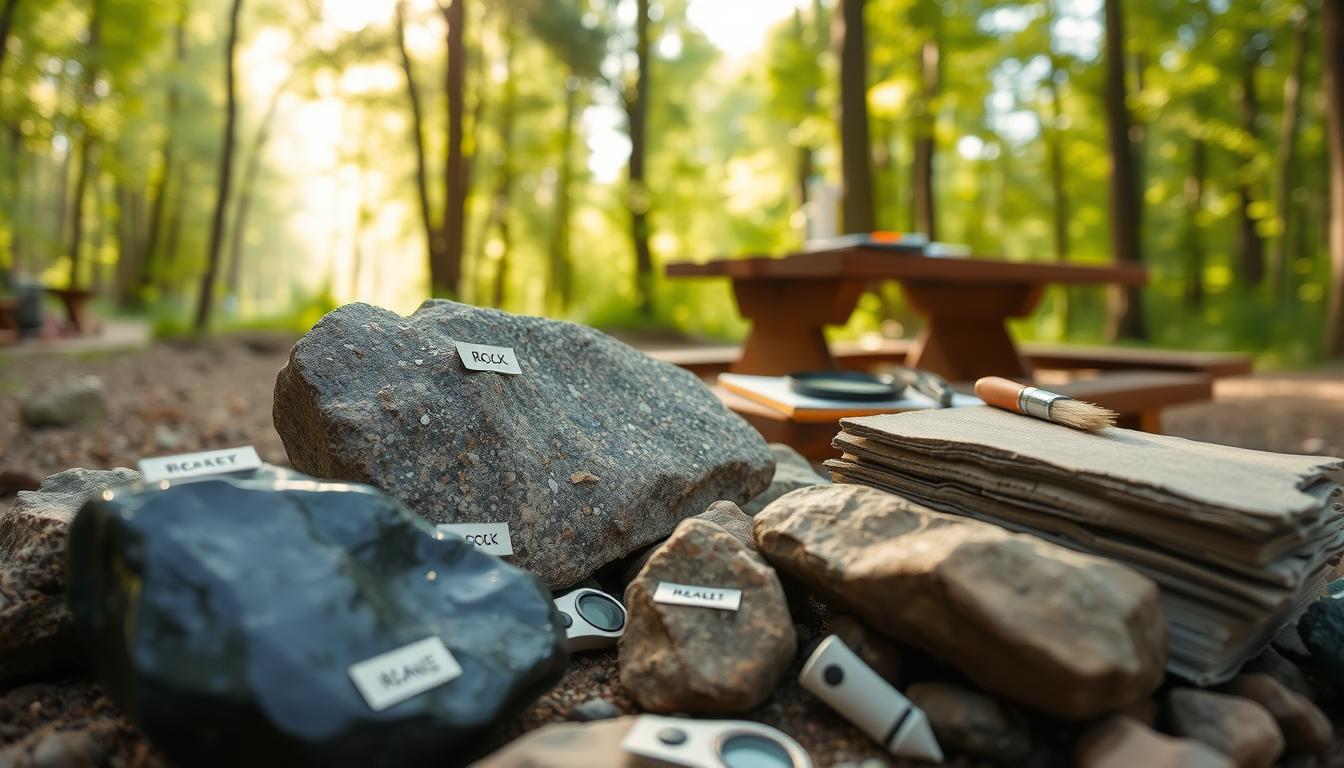
You need the right tools to find metamorphic rocks. A hand lens lets you see the rock’s details closely. A rock hammer helps you break open the rock to see inside.
- A hand lens for examining rock texture and mineral composition
- A rock hammer for breaking open rocks to inspect their internal structure
- An acid bottle for testing the rock’s reaction to acid
Simple Field Tests and Techniques
Knowing how to use your tools is key. Simple tests can help you figure out what rock you have. For example, a hand lens can show you if the rock has foliation or banding.
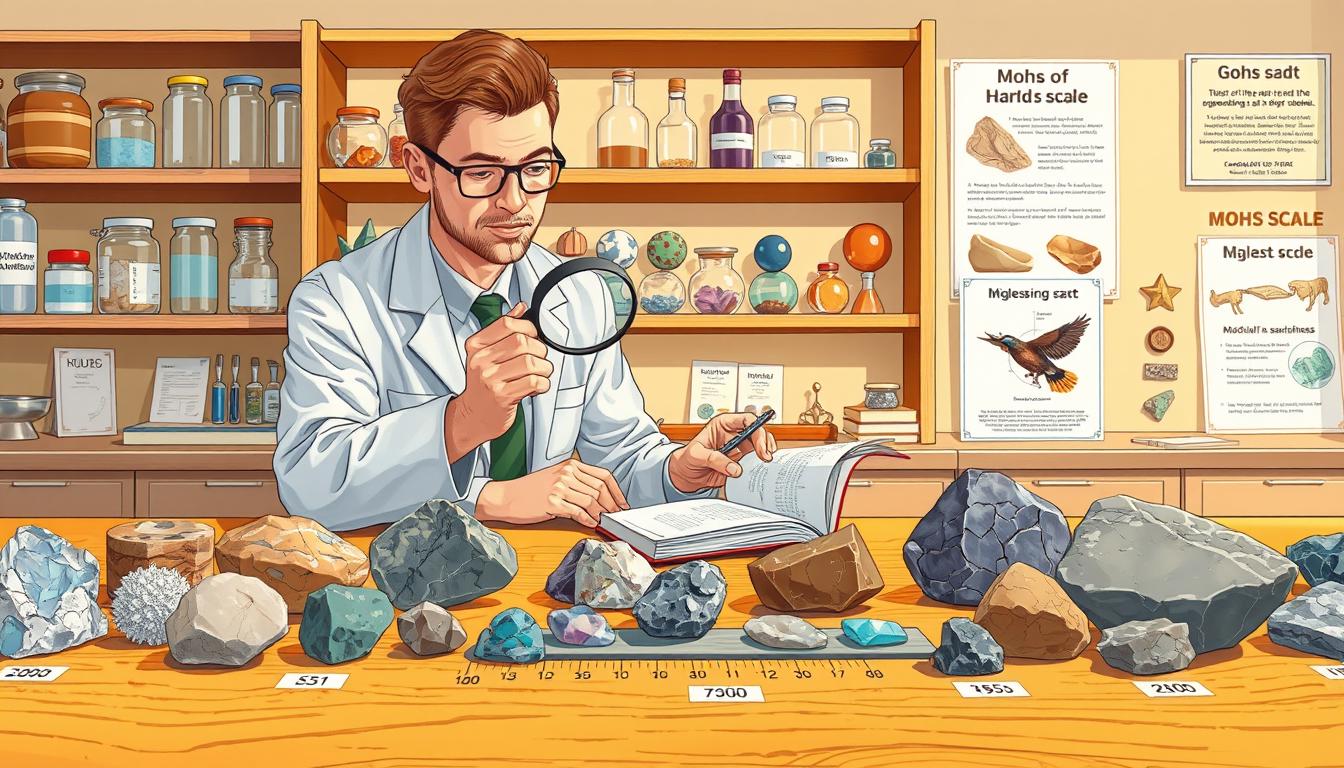
Testing the rock’s hardness with the Mohs scale is another way. You can also use an acid bottle to see how the rock reacts. This is good for rocks with carbonate minerals.
Common Identification Mistakes to Avoid
Even with the right tools, mistakes can happen. Don’t just look at one thing like color or texture. Look at many things and use different tests to be sure.
Not thinking about where the rock came from is another mistake. Knowing its history can help you guess what it is. By avoiding these mistakes and being careful, you can get better at finding metamorphic rocks.
Where to Find Metamorphic Rocks
Looking for metamorphic rocks takes you to many places. You can find them in mountain belts and around igneous intrusions. Knowing how they form helps you find them.
Natural Environments and Formations
Metamorphic rocks are found in areas that have changed a lot. These changes happen due to mountains forming, contact with magma, or high pressure deep in the Earth.
Mountain building zones are key places for these rocks. The high pressure and heat from mountain formation change existing rocks.
- Areas with a history of tectonic activity
- Regions with significant overthrusts or folds
- Zones around large igneous intrusions
Places near igneous intrusions are also good for finding these rocks. The magma’s heat changes the rocks nearby, creating special types.
Notable Metamorphic Rock Locations in the United States
In the United States, many places have metamorphic rocks. Some famous ones are:
- The Appalachian Mountains, known for their complex geological history and diverse metamorphic rock types.
- The Rocky Mountains, where metamorphic rocks are exposed due to uplift and erosion.
- The Piedmont region of the eastern United States, characterized by metamorphic rocks formed during the Paleozoic era.
These areas are great for rock lovers and geologists to study. Learning about their formation makes us appreciate their unique qualities more.
[link-whisper-related-posts]Conclusion
Learning to identify metamorphic rocks is rewarding. It lets you see the Earth’s history up close. This guide has shown you how to spot these rocks.
Knowing about texture, minerals, and other features helps you identify rocks. It’s great for anyone who loves geology or is studying it. This skill makes you appreciate the Earth’s complex history.
As you learn more about metamorphic rocks, you’ll find their stories amazing. They tell us about the Earth’s changes over millions of years. With time and effort, you’ll get better at identifying these rocks. You’ll understand the Earth’s wonders even more.
FAQ
What is metamorphism?
Metamorphism changes existing rocks into new ones. This happens because of changes in temperature, pressure, and chemical conditions.
What are the main types of metamorphism?
There are two main types. Regional metamorphism happens over large areas due to tectonic forces. Contact metamorphism occurs when rocks are near magma or other igneous bodies.
How do I identify a metamorphic rock?
Look for foliated or non-foliated texture, mineral composition, hardness, color, and banding patterns. Use field tests and examine the rock’s texture and minerals.
What are some common types of metamorphic rocks?
Common types include marble, slate, quartzite, and gneiss. These rocks can be foliated or non-foliated. They have unique textures and mineral compositions.
What tools do I need to identify metamorphic rocks in the field?
You’ll need a hand lens, rock hammer, and possibly a magnifying glass or other specialized equipment.
Where can I find metamorphic rocks?
You can find them in mountain building zones, around igneous intrusions, and in areas where tectonic forces have changed the Earth’s crust.
What are some notable locations in the United States where I can find metamorphic rocks?
Look in the Appalachian Mountains, Rocky Mountains, and areas around igneous intrusions in the western United States.
How can I distinguish between different types of metamorphic rocks?
Examine their texture, mineral composition, hardness, and color. Use field tests and techniques to help identify them.

Subscribe to Our Newsletter