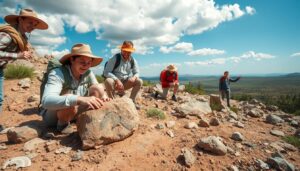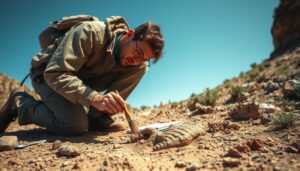
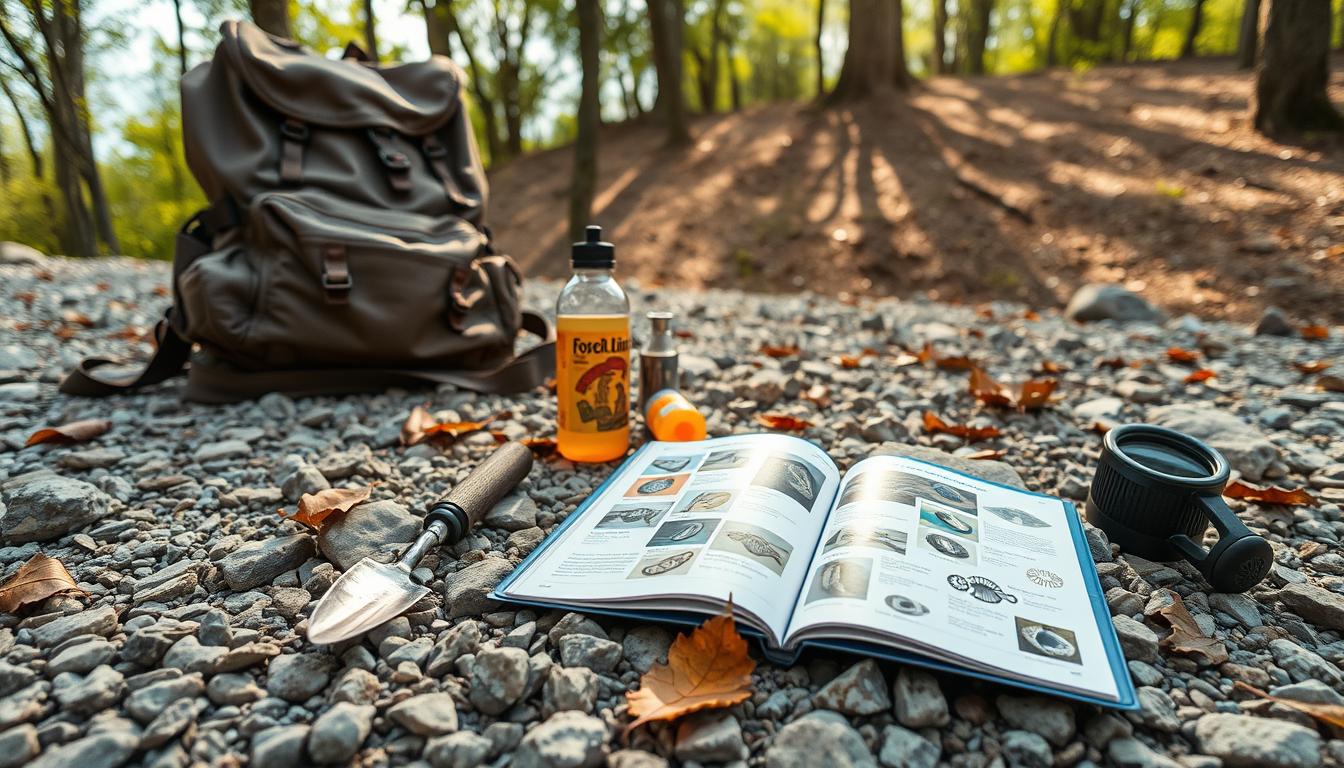
Starting a fossil hunting adventure needs the right tools. It makes the journey fun and successful. Knowing the fossil hunting essentials is key for beginners.
The right tools and supplies are vital for finding hidden treasures. At Zoic Palaeotech, you can find starter kits and bundles. They help beginners start preparing fossils.
The right gear makes hunting better and keeps you safe. It also helps keep the fossils safe. As you start, learning about the basic equipment is important.
Key Takeaways
- Understand the importance of proper equipment for fossil hunting.
- Familiarize yourself with the basic tools and supplies needed.
- Explore starter kits and bundles for beginners.
- Learn about the role of equipment in preserving fossils.
- Discover resources for getting started with fossil preparation.
Getting Started with Fossil Hunting
Fossil hunting is an exciting adventure that takes you back in time. It’s not just about finding old bones. It’s a mix of science, adventure, and exploration.
Understanding the Basics of Paleontology
Paleontology is all about studying fossils. These are the remains or traces of ancient life. Knowing the basics helps you understand and appreciate your finds.
Where to Hunt for Fossils
Fossils can be found in many places. Look for them in rocky areas, riverbeds, and by the coast. For tips on starting your fossil collection, check out our beginner’s guide.
Why Proper Tools Matter for Beginners
Good tools are key for finding fossils without harming them. They make hunting fossils more fun and rewarding. Get quality fossil hunting gear to start your journey.
Essential Digging and Extraction Tools
To find fossils, you need special digging tools. These tools help find and take out fossils safely.
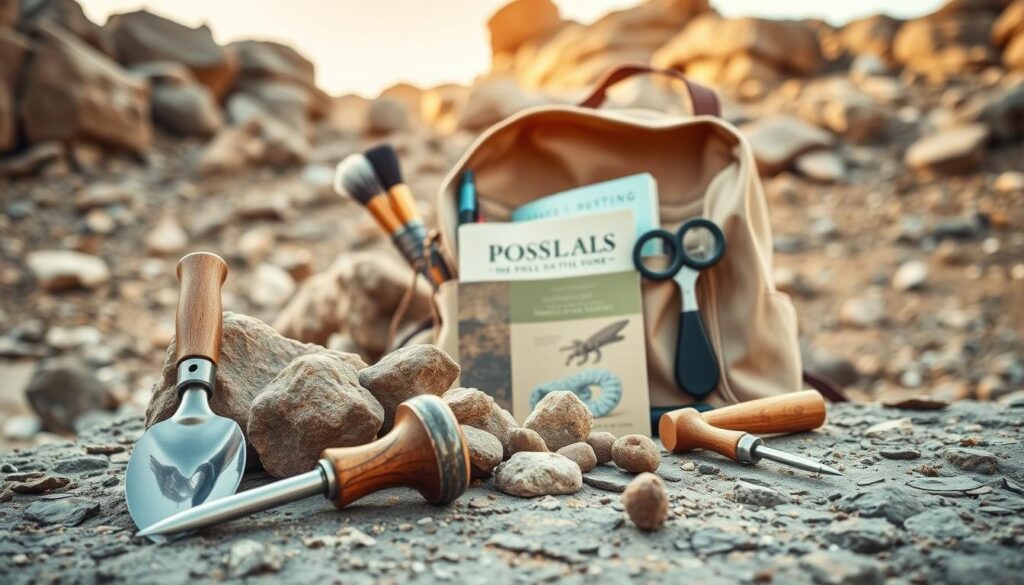
Geological Hammers and Rock Picks
Geological hammers and rock picks are key for fossil hunting. Hammers break up rock and soil. Rock picks are for precise digging. Together, they help dig and extract fossils carefully.
| Tool | Primary Use | Key Feature |
|---|---|---|
| Geological Hammer | Breaking rock and soil | Durable metal construction |
| Rock Pick | Precise excavation | Pointed tip for detailed work |
Chisels and Awls
Chisels and awls are key for getting fossils out of rock. Chisels carefully pry fossils loose. Awls remove small rock bits. They need a soft touch to protect the fossils.
Brushes and Cleaning Tools
After getting fossils out, use brushes and cleaning tools to clean them. Soft brushes are best for delicate fossils. Stronger brushes work on tougher fossils. The right brush makes the fossil details clearer.
Shovels and Trowels
Shovels and trowels are for starting the digging. Shovels remove lots of soil and rock. Trowels are better for detailed work around fossils. They help get to the fossil layers.
Protective Gear for Fossil Hunters
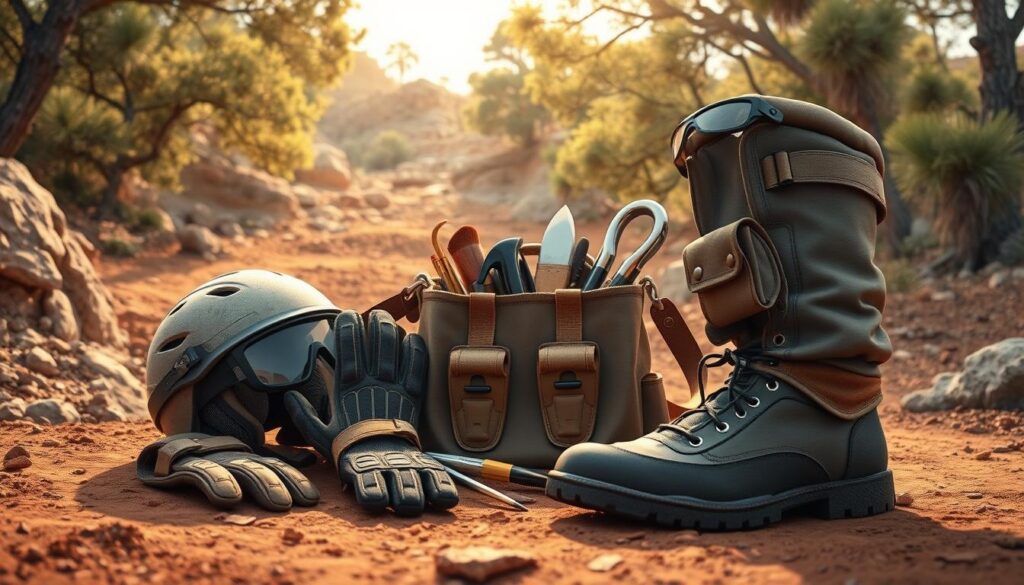
Protective gear is key for fossil hunters to stay safe. It helps avoid injuries and makes the experience better. Fossil hunting means exploring rough places, using sharp tools, and facing dangerous materials.
Safety Goggles and Face Protection
Safety goggles are a must for fossil hunters. They keep eyes safe from flying rocks when using tools. Face masks or shields also protect against dust and debris.
Gloves and Hand Protection
Gloves are important for hand safety. They help grip, prevent blisters, and protect from sharp edges. Choose gloves that are tough and let you feel things well.
Appropriate Clothing and Footwear
Wearing the right clothes and shoes is also key. Good boots with grip are needed for uneven paths. Clothes should be strong, comfy, and fit the weather.
With the right gear, fossil hunters can enjoy their hobby safely. They can have more fun and peace of mind.
Collection and Storage Equipment
Finding fossils is just the start. You must also collect and store them carefully. The right tools help keep fossils safe and make your discoveries valuable.
Field Bags and Backpacks
A good field bag or backpack is key for carrying everything. It should be water-resistant and have lots of pockets. This keeps your gear and fossils safe and organized.
Specimen Containers and Vials
Specimen containers and vials are vital for safe storage. They protect fossils from getting broken or damaged. Pick the right size for your finds and label them for easy tracking.
Wrapping and Cushioning Materials
Wrapping and cushioning materials like paper and bubble wrap are important. They help keep fossils safe during transport. Wrap each one well to avoid damage from bumps.
Labeling and Cataloging Supplies
Labeling and cataloging supplies help you keep track of your fossils. Use labels to note the date, location, and type of fossil. A catalog or logbook helps organize your collection for future reference.
Beginner Fossil Hunting Tools and Supplies Kits
Starting a fossil hunting hobby needs careful planning. Beginners can choose from pre-assembled kits or build their own collection.
Pre-assembled Commercial Starter Kits
Pre-assembled kits are great for beginners. They come with tools like hammers, chisels, and brushes. The “Fossil Hunter’s Starter Kit” is a good choice for its value.
Building Your Custom Kit on a Budget
Building your own kit is flexible and can save money. Start with a hammer, safety goggles, and a brush. Add more tools as you learn. Choose durable, versatile tools for a strong start.
Essential Tools vs. Nice-to-Have Accessories
It’s important to know the difference between must-have tools and nice extras. Essential tools help you extract and clean fossils. Nice extras, like magnifying glasses, make hunting more fun but aren’t necessary at first.
By focusing on essential tools, beginners can create a good fossil hunting kit. This kit will meet their needs and fit their budget.
Identification and Reference Resources
Accurate fossil identification is made easier with field guides, magnifying tools, and digital apps. These tools are key for both new and seasoned fossil hunters. They help understand and classify finds.
Field Guides and Reference Books
Field guides and reference books are vital for identifying fossils. They offer detailed descriptions and images of different fossils. This helps hunters narrow down their options. Look for guides with local fossil coverage, clear photos, and detailed descriptions.
- Comprehensive coverage of local fossils
- Clear photographs and detailed descriptions
- Easy-to-use identification keys
Magnifying Tools and Loupes
Magnifying tools and loupes are key for close-up fossil examination. They let hunters see fine details important for accurate identification. A high-quality magnifying glass or loupe greatly aids in the identification process.
Digital Apps and Online Resources
Digital apps and online resources have changed fossil hunting. Apps like Fossil ID and online databases offer a wealth of information. These resources include forums and communities for sharing findings and getting expert feedback.
[link-whisper-related-posts]Conclusion: Starting Your Fossil Hunting Journey
Starting a fossil hunt is exciting. Being ready is important to enjoy it fully. With the right tools and knowledge, beginners can find ancient treasures.
Tools like geological hammers and chisels are key. They help find and keep fossils safe. Getting these tools is a good start for any fossil hunter.
When you start hunting fossils, know the rules and safety tips. This way, you can explore and find secrets from the past safely.
This article has given you the basics to start your fossil hunt. You now have the knowledge and tools to enjoy your adventure.
FAQ
What are the most essential tools for beginner fossil hunting?
For beginner fossil hunting, you need a geological hammer, chisels, awls, brushes, and cleaning tools. These help you get and prepare fossils for study.
What type of protective gear is necessary for fossil hunting?
Wear safety goggles, gloves, and sturdy clothes and shoes for protection. Safety goggles from DeWalt or 3M are great for safety.
How do I store and transport fossils?
Store fossils in containers or vials, wrapped in paper or bubble wrap. Use a field bag or backpack. Use Sharpie or Ampad labels and notebooks to track your finds.
What are the benefits of using a pre-assembled commercial starter kit for fossil hunting?
Starter kits are easy and affordable for beginners. They come with essential tools and supplies, like those from Estwing or PaleoTools.
How can I identify the fossils I find?
Use field guides and reference books from the University of California Press or Princeton University Press. Magnifying tools and loupes from Eschenbach or OttLite help too. Digital apps and online resources also offer valuable info.
What are some tips for building a custom fossil hunting kit on a budget?
Focus on must-have tools like hammers, chisels, and brushes. Look for deals or second-hand items. Add nice-to-have items like a rock pick or fossil brush as you learn more.

Subscribe to Our Newsletter